
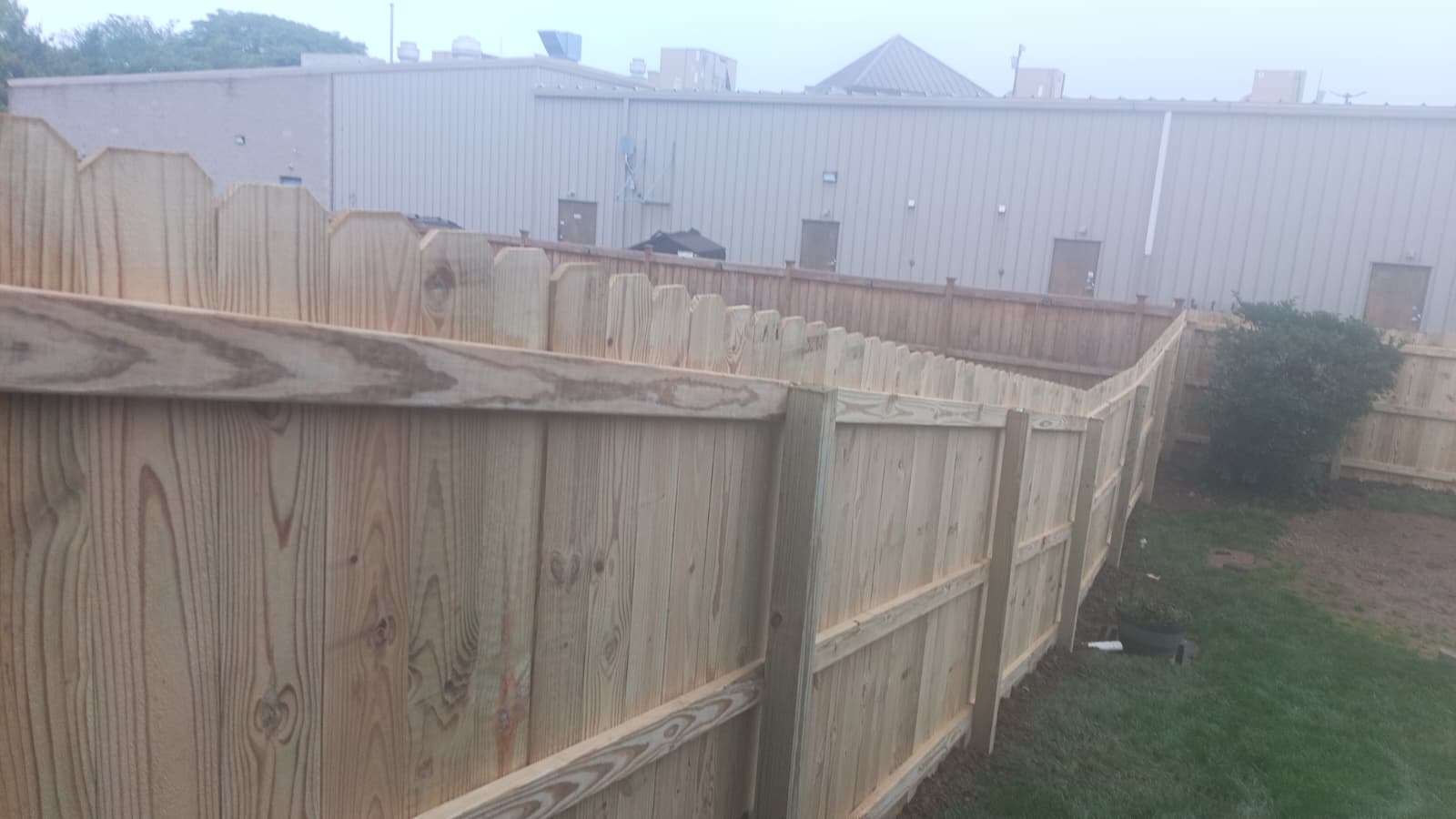
The clearest signs a wood fence needs full replacement are widespread post rot at the ground line, multiple posts leaning, board separation across more than a third of the run, and structural sagging. A single damaged section can usually be repaired. When damage is spread across the whole line, or the fence is past 20 years old, replacement is the better investment.
Wood fences do not fail all at once. They fail in sections, and the challenge is knowing when the damage has spread enough that replacement makes more sense than repair. At Fence Company of Columbus, we do both kinds of work every week. Here are the seven signs we look for on a property assessment.
One leaning post is a repair. Multiple leaning posts across the run point to a broader structural issue. The most common cause is post rot at the ground line, which affects posts installed around the same time, so they tend to fail in clusters rather than one at a time. When three or more posts are leaning, replacement usually costs less than fighting the same problem repeatedly.
The single most vulnerable part of any wood post is the point where wood meets soil. Moisture wicks up from the ground into the end grain, and over time the fibers break down. Test with a screwdriver at the base of each post. If the tip sinks in easily or the wood crumbles, the post is compromised.
A few isolated rotted posts can be replaced. Widespread rot across the run means the fence's structural foundation is gone.
Individual board gaps are normal as a wood fence ages. Whole sections where boards have separated from the rails, warped away, or fallen off entirely mean the fasteners have failed or the wood has moved too much to hold together anymore. When more than a third of the run shows this level of separation, the fence is beyond repair.
Scattered warped boards are a minor issue. Warping and cupping across the entire run indicates the wood has lost its dimensional stability, usually from long-term moisture exposure. Replacement boards installed into a fence with widespread warping tend to look mismatched and do not fix the underlying issue.
Small round holes, sawdust piles at the base of posts, or hollow-sounding boards when tapped suggest insect activity. Termites in particular can hollow out a post from the inside without much visible damage on the surface. Once insect damage is spreading, replacement is usually the more responsible call because treated wood in a new fence resists reinfestation.
Green or black staining, mushroom growth at the base of posts, or areas that never dry out even in warm weather indicate the fence is holding moisture it should be shedding. Once fungal growth is visible, the wood underneath is already compromised. Localized areas can be treated, but widespread growth suggests the fence is at the end of its useful life.
A properly installed pressure treated or cedar fence in Ohio typically lasts 20 to 30 years. If your fence is at or past that mark and you are already seeing early symptoms of failure, replacement is more cost effective than trying to extend the life of a fence that is already outperformed.
Not every damaged fence needs to be replaced. Repair is the right call when:
A good rule is 30 percent. If less than 30 percent of the run is compromised, section repair is usually the better financial choice. If more than 30 percent shows failure, replacement resets the clock and typically costs less per year of remaining life.
Yes, if only a few posts are the issue. Post replacement is a common repair. If more than three or four posts across a run are leaning at once, it usually indicates broader problems that repair will not solve.
Properly installed pressure treated and cedar wood fences last 20 to 30 years in central Ohio's climate. Poor installation, undersized posts, or skipped concrete footings can cut that in half.
Section repair typically runs a few hundred to a few thousand dollars depending on scope. Full replacement runs several thousand to tens of thousands depending on linear footage. The math changes when the repair keeps recurring.
At Fence Company of Columbus, we walk homeowners through the repair versus replace decision on a property assessment and help you understand what the fence is telling you before you spend on either.
👉 Call us, email us, or fill out the form on the home page to receive a free quote. We serve Powell, Dublin, Westerville, Worthington, Hilliard, Upper Arlington, and Delaware.
Written by the team at Fence Company of Columbus, updated July 2026.


Business License # HIC-L01324

