
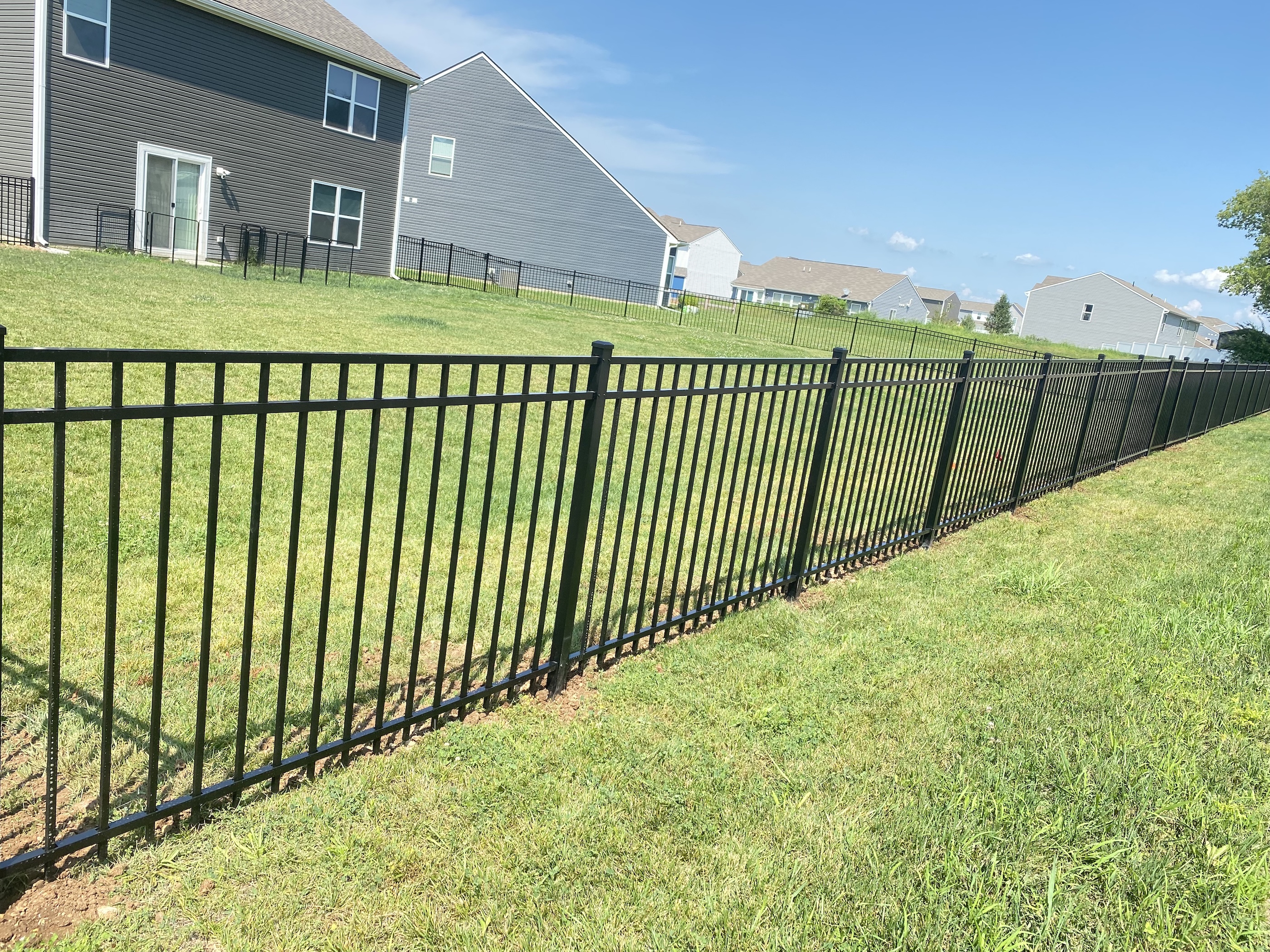
For homeowners drawn to the classic black metal fence look, one question comes up over and over again. Should I get aluminum or wrought iron? The two materials look nearly identical from a few feet back, which makes the comparison surprisingly easy to overlook until estimates come in and the prices are wildly different. At Fence Company of Columbus, we install far more aluminum than wrought iron these days, and the reasons matter for any homeowner considering either option.
For nearly all residential projects in central Ohio, aluminum is the right choice. It costs less, lasts longer in our climate, requires essentially no maintenance, and looks almost identical to wrought iron from anywhere outside arm's reach. Wrought iron still has its place on certain historic and high-security applications, but the everyday residential pool, yard, and ornamental fence work is dominated by aluminum for good reason.
The two materials are fundamentally different metals.
The same dimensions in aluminum weigh roughly one third as much as wrought iron, which has practical implications during installation and over the life of the fence.
This is where the comparison stops being close.
Wrought iron rusts. There is no way around this. Even the highest quality iron fence requires periodic sanding, rust treatment, and repainting to keep looking the way it did at install. Skip the maintenance for a few years and rust streaks start running down pickets, especially in central Ohio where road salt, humid summers, and freeze-thaw cycles accelerate corrosion.
Aluminum does not rust. The powder coat finish on a quality aluminum fence holds up for decades without flaking or fading. Most reputable aluminum fences carry a lifetime finish warranty for residential use. Maintenance is essentially limited to an occasional rinse with a garden hose.
For most central Ohio homeowners, this single factor is the deciding one.
Wrought iron is more expensive at install and dramatically more expensive over the life of the fence once maintenance is factored in.
A homeowner installing 200 linear feet of fence will usually see aluminum come in at a meaningful discount on day one. Over 20 years, the gap widens considerably.
This is the one area where wrought iron has a real advantage. Iron is heavier and more impact resistant. If your fence will be exposed to heavy impacts, mounted animals, or other unusual stress, wrought iron handles it better. For typical residential applications including pool fencing, perimeter ornamental fences, and pet containment, aluminum is more than strong enough.
From the road or across a yard, the two look essentially identical. Both can be made in flat-top, spear-top, scroll-top, and pressed-point styles. Both come in standard heights from 36 inches up through 72 inches. The visual difference only becomes noticeable up close, where the slight forge marks of true hand-worked iron differ from the cleaner extruded look of aluminum.
For most homeowners and visitors, the look is functionally the same.
There are a few cases where wrought iron is still the right call:
Outside those cases, aluminum almost always wins on lifecycle terms.
Aluminum dominates pool fencing in central Ohio for one specific reason. The chlorinated environment around pools is brutal on iron. A wrought iron pool fence may need significant restoration work within 5 to 7 years. An aluminum pool fence in the same environment will still look new at the 15 year mark. When pool code compliance is the requirement, aluminum is also typically less expensive to bring up to spec.
At Fence Company of Columbus, we install both aluminum and ornamental steel fences across central Ohio, and we are happy to walk you through which fits your specific project. Whether you are considering a pool fence, a perimeter ornamental fence, or a decorative front yard accent, we will help you weigh the realistic tradeoffs without pushing a particular material.
👉 Contact us today at 614-412-3353 or request your free estimate online. We proudly serve homeowners and businesses throughout the Columbus area, including Powell, Dublin, Westerville, Worthington, Hilliard, Upper Arlington, and Delaware.


Business License # HIC-L01324

