
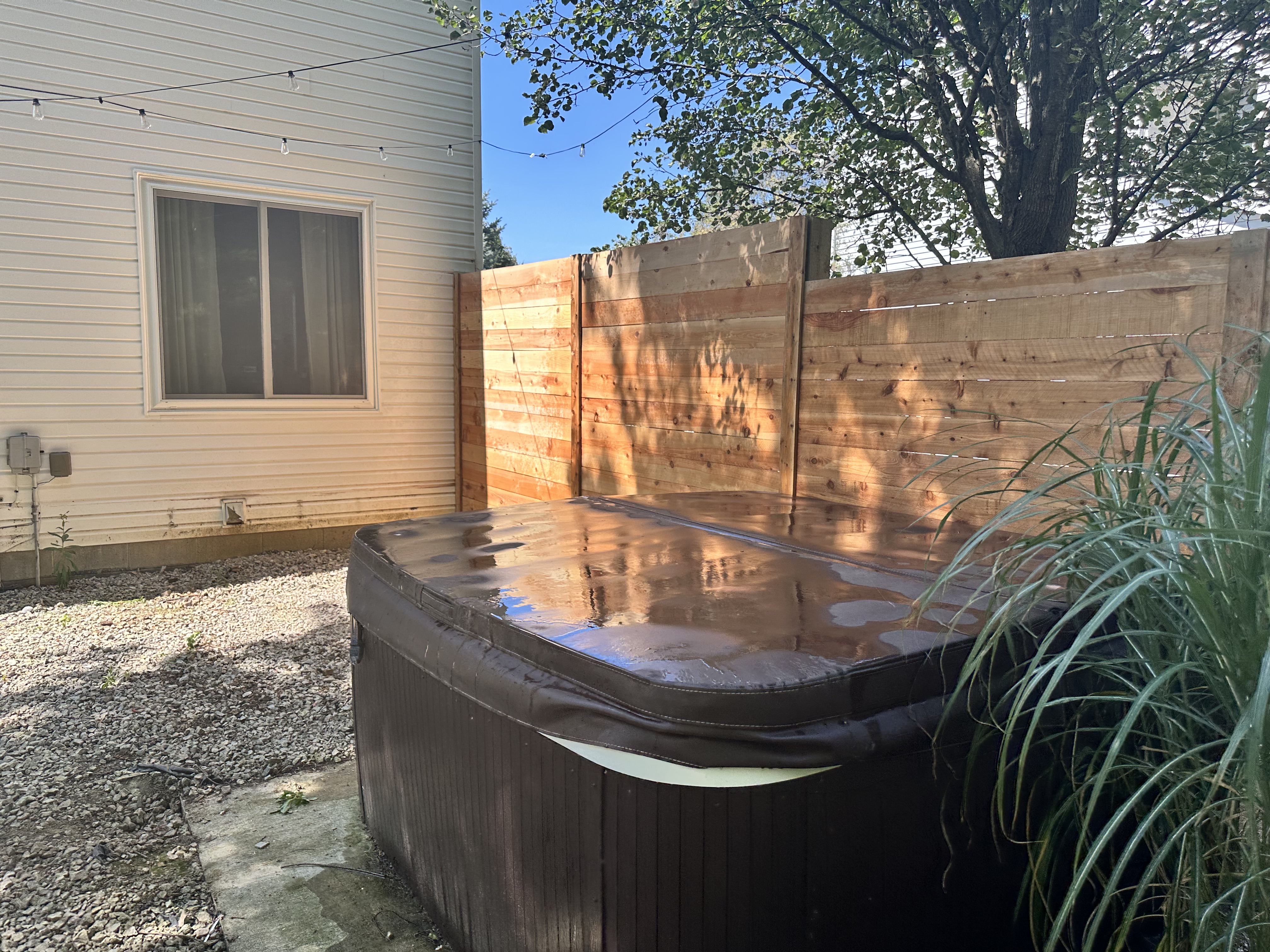
A new cedar fence starts as warm honey blonde and weathers to a soft silver gray over roughly 12 to 18 months in Ohio's climate. The color change is normal and driven by UV exposure and the natural oils in cedar. You can accept the silver patina, or apply a semi transparent sealer within the first 3 to 6 months to preserve the warmer wood tone.
One question comes up on every cedar fence project we install at Fence Company of Columbus. What is going to happen to the color? Here is the timeline every cedar fence in central Ohio goes through, and how to influence it if you want a different final look.
Fresh cedar comes off the truck with a warm honey blonde tone, sometimes with red or amber undertones running through the grain. You can see the natural knot patterns, the vertical grain lines, and the distinctive cathedral-shaped growth patterns. There is no stain or sealer applied at the factory. What you see is what the wood looks like straight from the mill.
Different boards from the same lumber lot may look slightly different from each other. This is normal. Cedar has natural color variation that only becomes uniform after weathering.
In the first month, the wood begins to acclimate to the outdoor environment. Trapped moisture from the milling process releases. Small dimensional changes happen as the boards adjust. You may see slight cupping or minor gapping between boards. This is normal and stabilizes after the first few weeks.
The color at 30 days is essentially the same as day one. Cedar does not begin its color change until UV exposure has done its work.
Around the 3 to 6 month mark, the color change starts to become visible. South-facing panels and boards that get the most sun begin to lighten first. North-facing panels stay closer to the original honey tone for longer. The result can look a little uneven for a while.
This is the ideal window to apply a stain or sealer if you want to preserve the warmer color. The wood has dried enough to accept product, and the weathering has not yet set in fully.
Between 6 and 18 months, the cedar completes its transformation to a soft silver gray patina. The rate varies with sun exposure, moisture, and how the fence is oriented. A privacy fence with heavy south exposure may fully gray in 8 to 10 months. A shaded fence on the north side of a property may take a full 18 months.
Once the patina sets, it is remarkably stable. The silver gray look does not deepen further or turn dark. It stays roughly the same for the remaining decades of the fence's life, refreshing slightly each spring as the winter grime rinses off.
If you prefer the honey blonde look and want to keep it, sealing the fence is the answer. A few notes:
A cedar fence that has gone fully silver gray is not a fence that needs to be replaced or refinished. It is a fence that has settled into its long-term appearance. Most cedar fences installed correctly in central Ohio last 20 to 30 years, well past the color transition.
My cedar fence looks patchy after 6 months. Is that normal?
Yes. Uneven weathering during the transition period is completely normal. South-facing sections weather faster than north-facing sections. The whole run evens out by month 12 to 18.
Can I stain cedar right after install?
It is better to wait at least 3 months. Fresh cedar still has milling moisture and natural oils that resist product absorption. Waiting lets the wood dry and open its pores for better penetration.
Does weathered cedar need to be sealed?
No. Weathered cedar is protected by its natural silver patina and does not require any treatment to keep performing. Sealing weathered cedar is purely a color decision, not a maintenance requirement.
Why does one side of my fence look grayer than the other?
Sun exposure drives the weathering rate. Boards that face south get the most UV and gray fastest. Boards on the north side of the fence weather slower. This is normal and evens out over 12 to 18 months.
At Fence Company of Columbus, we install cedar privacy fences that weather beautifully into the yards they belong to, and we walk you through the color timeline so you know what to expect at every stage. We are family owned, locally based in Powell, and proudly serve Powell, Dublin, Westerville, Worthington, Hilliard, Upper Arlington, Sunbury, and Delaware.
👉 Fill out the form on our home page to schedule a free estimate.
Written by the team at Fence Company of Columbus, updated July 2026.


Business License # HIC-L01324

