
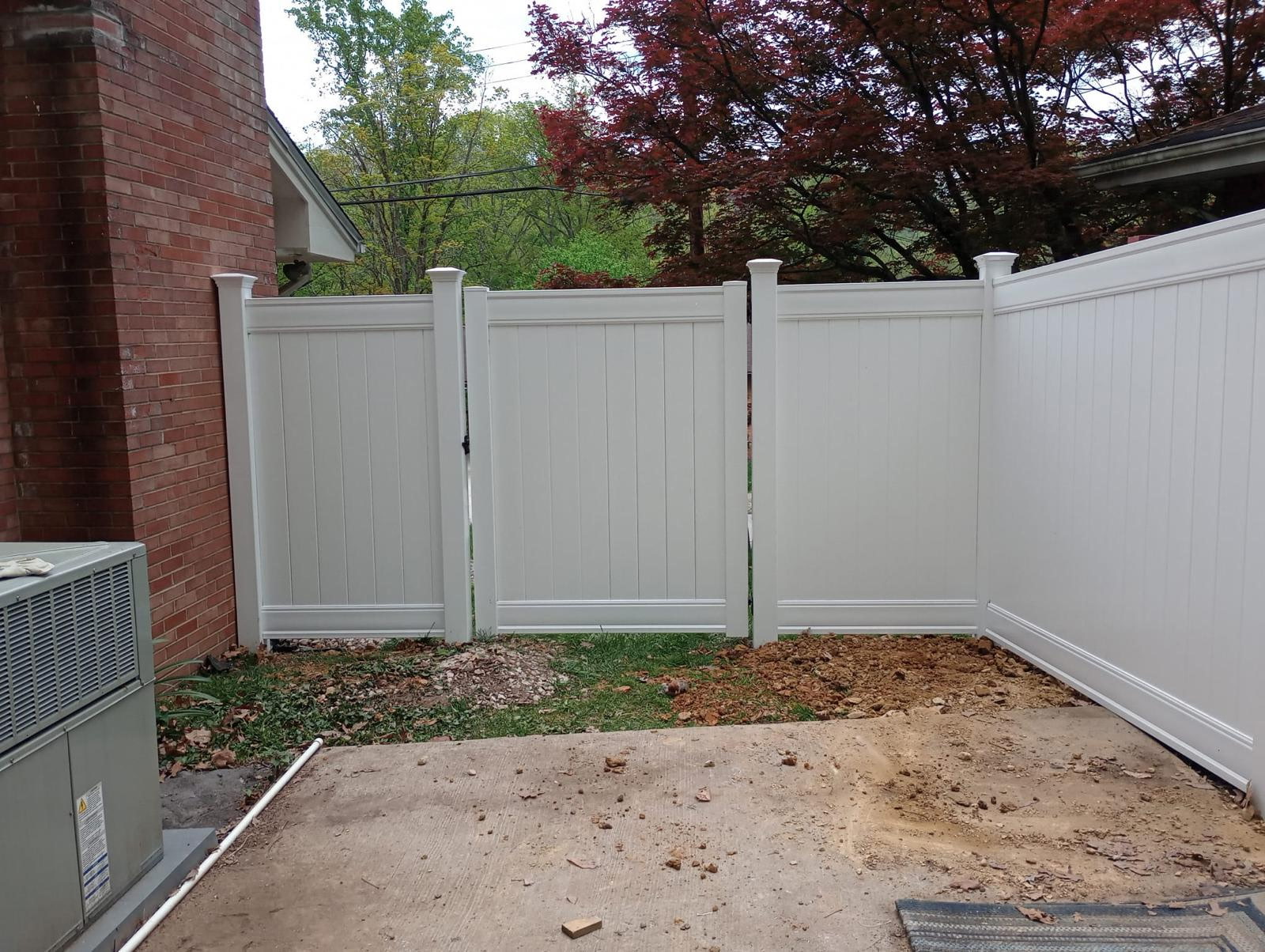
Corner lot fencing is different because two sides of the fence face street traffic instead of one. That changes what code allows (sight distance at the intersection), which styles look best (both sides finished), and how the fence reads from the curb. Shadowbox, board on board, Kentucky board, split rail, and aluminum ornamental are the strongest choices because they look intentional from every angle.
At Fence Company of Columbus, we install corner lot fences every month. The design decisions are meaningfully different from a standard interior lot. Here is what changes and how to handle it.
On an interior lot, the fence has a front (facing the street), a back (facing the neighbor behind), and two sides (facing side neighbors). The street sees one side of the fence. Everyone else sees the other.
On a corner lot, two sides face streets. That means more of the fence is visible from public view, and the good-side vs framing-side question stops having a clean answer. It also means municipal sight distance rules apply at the intersection, which can restrict fence height near the corner.
Styles where both sides of the fence look finished handle corner lots the best:
Traditional dog ear wood privacy fences are the hardest style to make work on a corner lot because you have to decide which street gets the smooth side and which gets the framing side. Neither answer is great.
Most Ohio municipalities apply the same 4 foot front yard height limit to both street-facing sides of a corner lot. That means the fence has to step down or open up near both frontages. Common approaches:
Most cities have a rule about maintaining clear sight lines at intersections. The sight distance triangle is typically defined as a triangle running from the corner of the property line back 25 to 30 feet along each street. Inside that triangle, no fence, hedge, or other visual obstruction above 3 feet is allowed.
The rule protects drivers who are approaching the intersection. A tall fence in the sight triangle can hide oncoming traffic or pedestrians. Cities take the rule seriously. If your fence design encroaches on the sight triangle, expect the permit application to require modification.
A corner lot fence contributes to the visual identity of the whole property more than an interior lot fence does. A few practical points:
Is a corner lot fence more expensive?
Usually yes, by 10 to 20 percent. Corner lots have more linear footage exposed to street view, and premium styles (shadowbox, aluminum ornamental) that work well on corners cost more than basic dog ear privacy.
What is the maximum fence height on a corner lot?
Typically 4 feet along both street frontages and 6 feet on the interior sides and rear. Rules vary by city, so check locally.
Can I still use a privacy fence on a corner lot?
Yes, but only in the interior rear and side sections. Front-facing sections need to be lower, more open, or set back from the street.
How does the good neighbor rule apply to a corner lot?
On symmetric styles (shadowbox, aluminum, Kentucky board), it does not apply because both sides look finished. On traditional privacy, the finished side typically faces the street rather than an interior neighbor, since street view matters more for HOA and municipal compliance.
At Fence Company of Columbus, we design corner lot fence projects with both street views, sight distance rules, and HOA standards in mind from the start, so you get a fence that looks intentional from every angle.
👉 Call us, email us, or fill out the form on the home page to receive a free quote. We serve Powell, Dublin, Westerville, Worthington, Sunbury, Upper Arlington, and Delaware.
Written by the team at Fence Company of Columbus, updated July 2026.


Business License # HIC-L01324

