
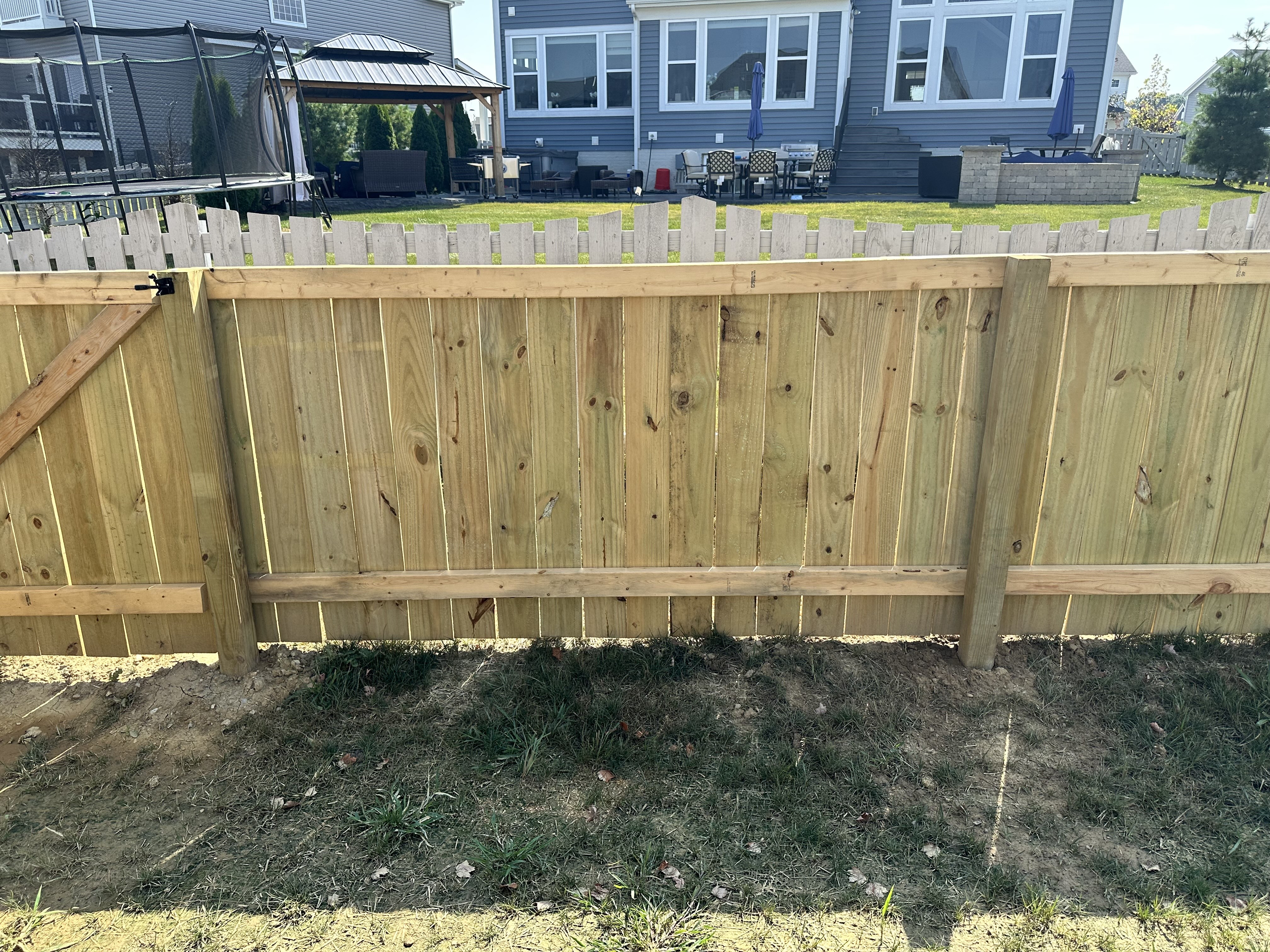
Gate hardware that lasts starts with hinges rated for at least the gate's weight (ball bearing hinges are the standard for anything over 20 pounds), corrosion resistant materials (stainless steel or heavily galvanized), and self closing mechanisms where safety code requires them. Cheap hardware is where most gates fail. Spending an extra $50 to $150 on premium hinges and latches often adds a decade to gate life.
At Fence Company of Columbus, we specify gate hardware separately from the gate itself because hardware is where most gate failures happen. Here is what actually matters when choosing gate hardware.
Gate hinges do more work than any other hardware. Every open, close, and gust of wind puts load on the hinges. Undersized or low-quality hinges are the number one cause of sagging gates in Ohio.
Latches do less mechanical work than hinges but are the single most-touched piece of gate hardware. A latch that sticks, misaligns, or requires jiggling every time becomes a daily annoyance.
Self closing hinges are spring-loaded to automatically pull the gate closed. Required by pool code across central Ohio and useful anywhere the gate needs to reliably close on its own (pet containment, kid safety, security).
Cheap self closing hinges wear out within 2 to 3 years and stop closing reliably. Quality self closing hinges last 10 to 15 years in daily use. The price difference at install ($20 to $50 per hinge) is a small fraction of the labor cost to replace them later.
Self latching mechanisms automatically engage as the gate closes. Combined with self closing hinges, they create a gate that reliably shuts and locks without human action. Pool code universally requires both.
Common self latching options include gravity latches (a top-mounted latch that drops into place as the gate closes) and magnetic latches (electronic or purely magnetic hold). Magnetic self latches tend to be more forgiving of gate alignment drift over years.
Double swing gates need a mechanism to hold the inactive leaf stationary while the active leaf is used as the primary access. Drop rods and cane bolts both do this job.
Automatic gates need everything above plus opener-specific hardware: mounting brackets rated for the opener type, safety photo eyes, warning signs (some jurisdictions require them), and often a manual override mechanism for power outages.
Automatic gate hardware selection depends heavily on the specific opener model. Follow manufacturer specifications rather than substituting generic parts.
What is the biggest hardware mistake homeowners make?
Using standard residential hinges on gates that are too heavy for them. A 4 foot wood gate is heavier than most people realize and needs ball bearing hinges rated for the actual weight.
How long should quality gate hardware last?
15 to 20 years for ball bearing hinges. 10 to 15 years for quality self closing hardware. Cheap hardware often fails within 3 to 5 years.
Can hardware be upgraded on an existing gate?
Yes, and this is a common repair. Swapping cheap hinges for ball bearing hinges can extend the life of an otherwise-sound gate by a decade.
Does pool code require specific brands?
No, but it does require specific functions: self closing hinges and self latching mechanisms with latch height at least 54 inches above ground on the pool side. Any brand that meets the specifications is acceptable.
At Fence Company of Columbus, we specify gate hardware rated for the actual gate weight and use case, so the gate you install today still operates smoothly a decade from now.
👉 Call us, email us, or fill out the form on the home page to receive a free quote. We serve Powell, Dublin, Westerville, Worthington, Hilliard, Upper Arlington, and Delaware.
Written by the team at Fence Company of Columbus, updated July 2026.


Business License # HIC-L01324

