
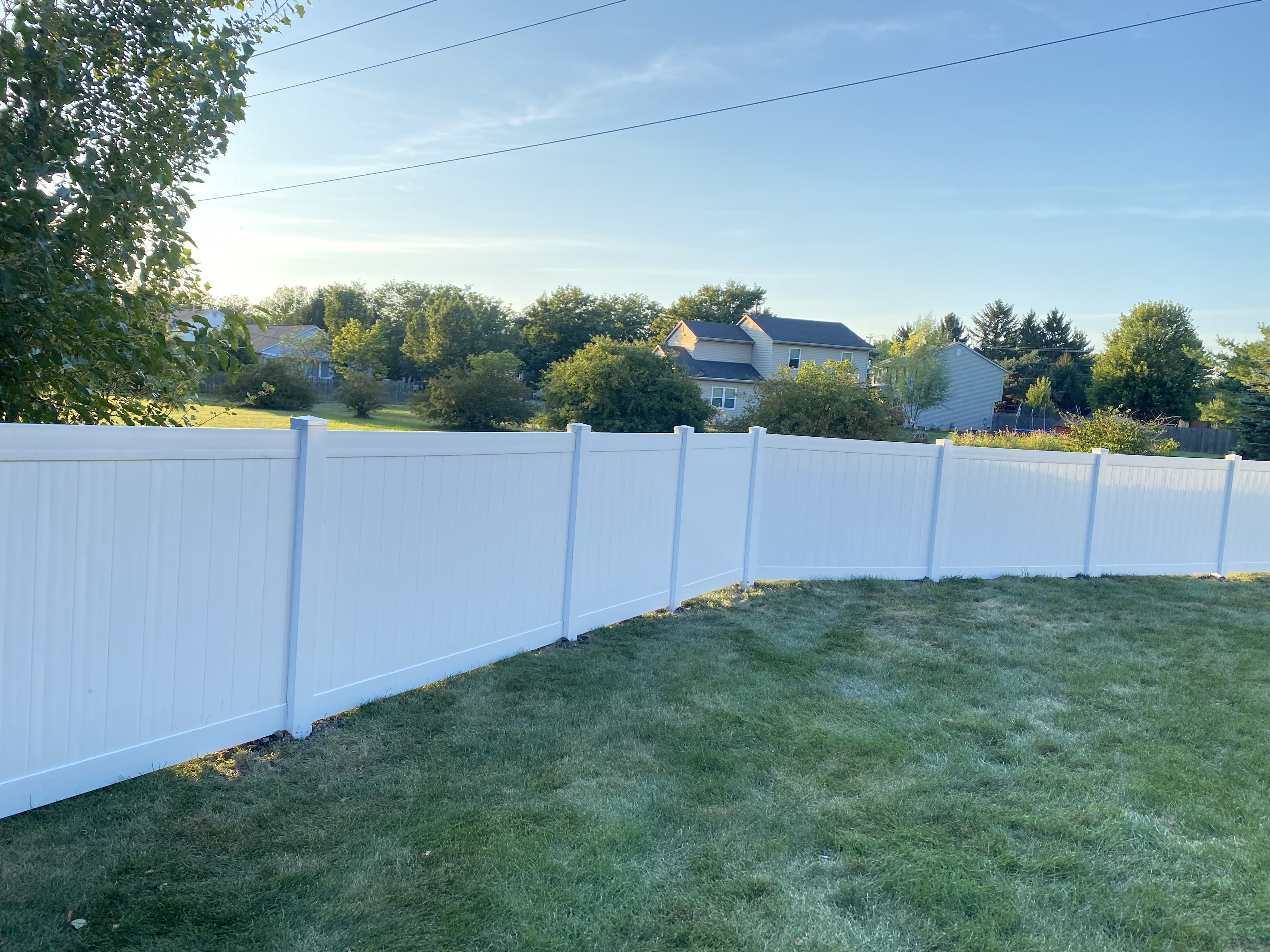
Vinyl is one of the most popular fence materials we install across central Ohio, and the reasons line up neatly with what most homeowners actually want. It looks clean, requires almost no maintenance, and stays consistent year after year. But before committing to a new vinyl fence, most homeowners want to know one specific thing. How long is it actually going to last?
The honest answer is that a quality vinyl fence in Ohio will typically last 20 to 30 years, often longer with a few simple practices. That puts vinyl well ahead of wood and competitive with aluminum on lifecycle terms. Here is what drives that lifespan and what you can do to get the most out of your investment.
For most homeowners, a properly installed vinyl fence in central Ohio will last:
These are realistic ranges based on real installations. The biggest factor is the grade of vinyl you start with, not the climate.
Vinyl fence panels are made from a high-impact PVC resin engineered to handle exactly the conditions Ohio throws at it. The color is not painted on. It is extruded through the entire thickness of the panel during manufacturing, which means scratches and surface scuffs do not reveal a different color underneath. Quality vinyl also includes UV inhibitors mixed into the resin, which prevents the sun-driven fading and chalking that plagues lower-grade vinyl.
Beyond the material itself, vinyl simply does not have the failure modes that affect wood and metal. It will not rot at the base, warp in summer humidity, rust at the connections, or peel like painted wood. Freeze-thaw cycles, which are tough on most building materials in central Ohio, leave quality vinyl essentially unaffected.
The biggest factor is the grade of vinyl you start with. Inexpensive vinyl made with thinner walls, lower PVC content, or skipped UV stabilizers will fade, chalk, and crack much sooner. The price gap between economy vinyl and quality vinyl looks small at install but grows dramatically when you account for replacement timing.
Installation is the other large factor. Vinyl posts need to be set deep enough to handle wind load and concrete-set to prevent shifting through ground freeze-thaw cycles. A vinyl fence installed correctly can stand straight for decades. The same fence installed with shallow posts or undersized concrete footings can lean within a few seasons.
Damage from outside the fence is the third factor. Vehicle impacts, large limbs from a fallen tree, and severe storms can crack or break panels. The good news is that vinyl fences are designed in modular sections, so a single damaged panel can be replaced without rebuilding the whole run.
For context, here is roughly how the major fencing materials compare in central Ohio:
Vinyl sits in a sweet spot for homeowners who want the warmth of a privacy or picket look without the maintenance and replacement cycle that comes with wood.
Vinyl is genuinely low maintenance, but a few simple habits stretch its life noticeably:
Ohio combines humid summers, cold winters with significant freeze-thaw activity, and occasional heavy storms. Quality vinyl is engineered for exactly this environment, but the way it is installed matters more here than it does in places without serious frost. Posts need to clear the frost line, panels need proper expansion gaps, and gates need hardware rated for temperature swings. These are the details that move a vinyl fence from a 20-year fence to a 30-year fence.
At Fence Company of Columbus, we install vinyl fences built for the long haul, with quality materials, proper post depth, and the local installation experience that makes the difference between a fence that lasts and a fence that lasts the way you expected. If you are weighing a new vinyl fence for your home, reach out for a free estimate. We are happy to walk through your options and answer the rest of your questions.
👉 Contact us today at 614-412-3353 or request your free estimate online. We proudly serve homeowners and businesses throughout the Columbus area, including Powell, Dublin, Westerville, Worthington, Hilliard, Upper Arlington, and Delaware.


Business License # HIC-L01324

