
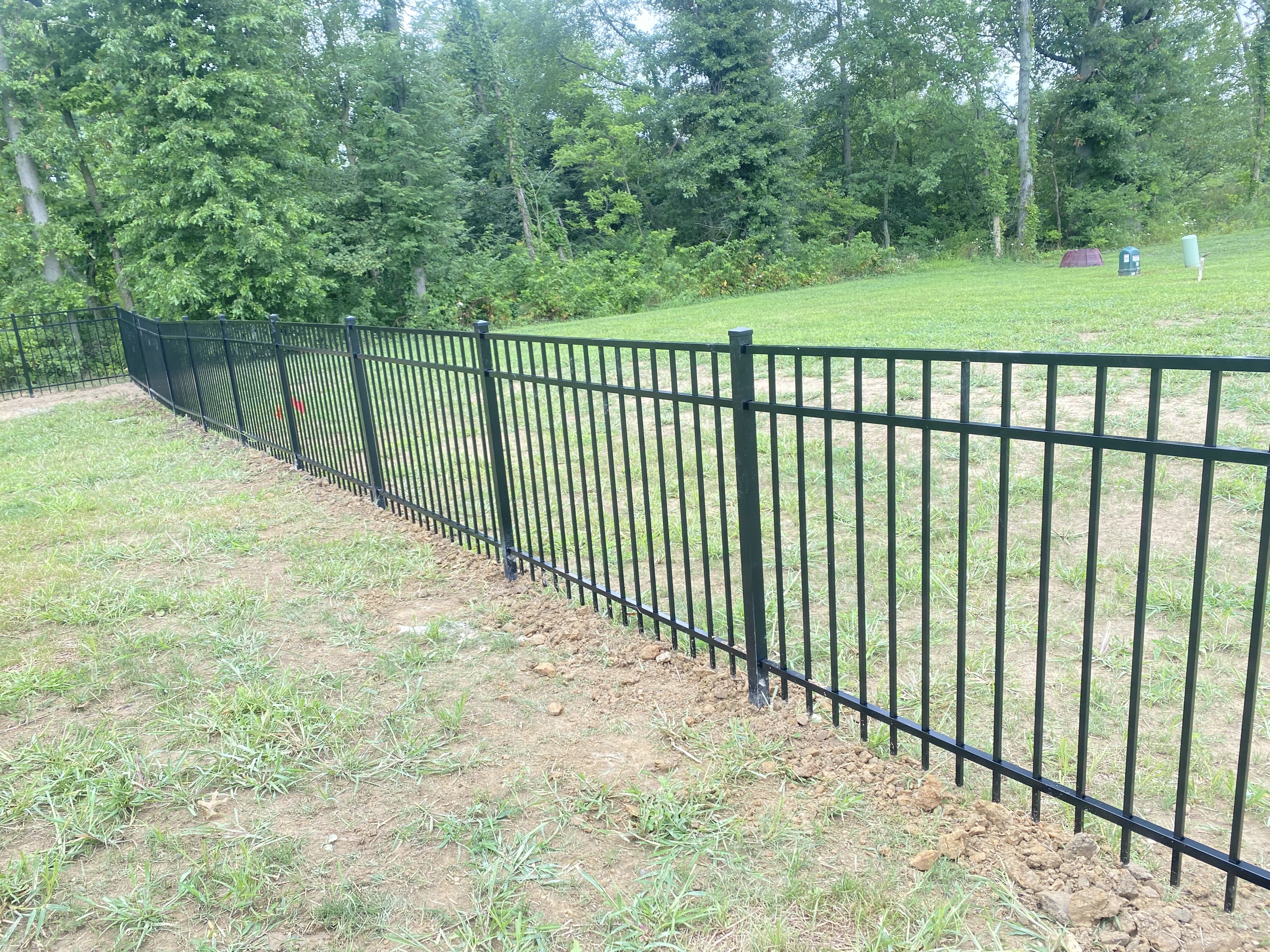
Ornamental steel is heavier, stronger, and can last 60 to 100 years with proper maintenance, but it needs periodic upkeep to prevent rust. Ornamental aluminum is lighter, holds its powder coat finish for decades without rusting, and costs less to install, but is not as impact resistant. For most residential yards in central Ohio, aluminum wins on lifecycle cost. For security applications or historic restoration, steel still makes sense.
At Fence Company of Columbus, we install both ornamental steel and ornamental aluminum fencing. From ten feet away they look nearly identical. Up close and over time, they behave very differently. Here is how they compare and how to pick between them.
Ornamental steel is fabricated from tubular steel or welded solid steel components. The base metal is iron with a small percentage of carbon added for strength. Steel is heavier, stronger, and more rigid than aluminum. It is also vulnerable to rust wherever the protective coating is damaged or worn.
Ornamental aluminum is fabricated from extruded aluminum tubing and pickets. Aluminum weighs about one-third of steel by volume and does not rust because the metal itself does not oxidize the way iron does. The tradeoff is that aluminum is softer and can dent under significant impact where steel would resist.
Ornamental steel with a quality powder coat finish lasts 30 to 60 years in Ohio's climate with periodic maintenance. Historic wrought iron fences over 100 years old still stand in central Ohio, but they have been repainted and rust-treated many times over that lifespan.
Ornamental aluminum with a quality powder coat finish lasts 40 to 60 years and often longer with essentially no maintenance beyond an occasional rinse. Most manufacturers back residential aluminum with a lifetime finish warranty for the original owner.
Maintenance is where most homeowners end up preferring aluminum. The initial visual difference between steel and aluminum is minimal. The long-term maintenance difference is substantial.
Steel has the clear advantage on strength. A steel picket resists impact from mowers, wheelbarrows, and even vehicle contact better than aluminum. For high-security applications, commercial perimeters, and situations where the fence needs to physically stop something, steel is the right choice.
For typical residential yards, aluminum's strength is more than adequate. Pet and kid containment, pool code compliance, and property line definition are all well within aluminum's capabilities.
Aluminum typically costs 20 to 30 percent less than ornamental steel at the initial install. The gap widens over the life of the fence when you factor in maintenance. A steel fence with 40 years of periodic repainting can end up costing double what an aluminum fence would over the same period.
Can you tell steel and aluminum apart visually?
From 10 feet away, most people cannot. Up close, steel welds are slightly rougher and the pickets feel more substantial. The powder coat finish looks identical.
Which is better for pool fencing?
Aluminum wins for pool fences because chlorinated splash water and constant humidity accelerate rust on any exposed steel. Aluminum shrugs off pool environments for decades.
Does steel need to be galvanized under the powder coat?
Yes, quality ornamental steel is galvanized first, then powder coated. The galvanizing provides the primary rust protection. Skip the galvanizing and the fence will fail within a decade regardless of the powder coat quality.
What about wrought iron?
True wrought iron is rare in modern residential work. Most fences sold as wrought iron are actually welded steel with a wrought iron aesthetic.
At Fence Company of Columbus, we install both ornamental steel and ornamental aluminum fencing, and we walk you through the tradeoffs on site so the fence you get matches the actual application rather than a sales pitch.
👉 Call us, email us, or fill out the form on the home page to receive a free quote. We serve Powell, Dublin, Westerville, Worthington, Hilliard, Upper Arlington, and Delaware.
Written by the team at Fence Company of Columbus, updated August 2026.


Business License # HIC-L01324

