
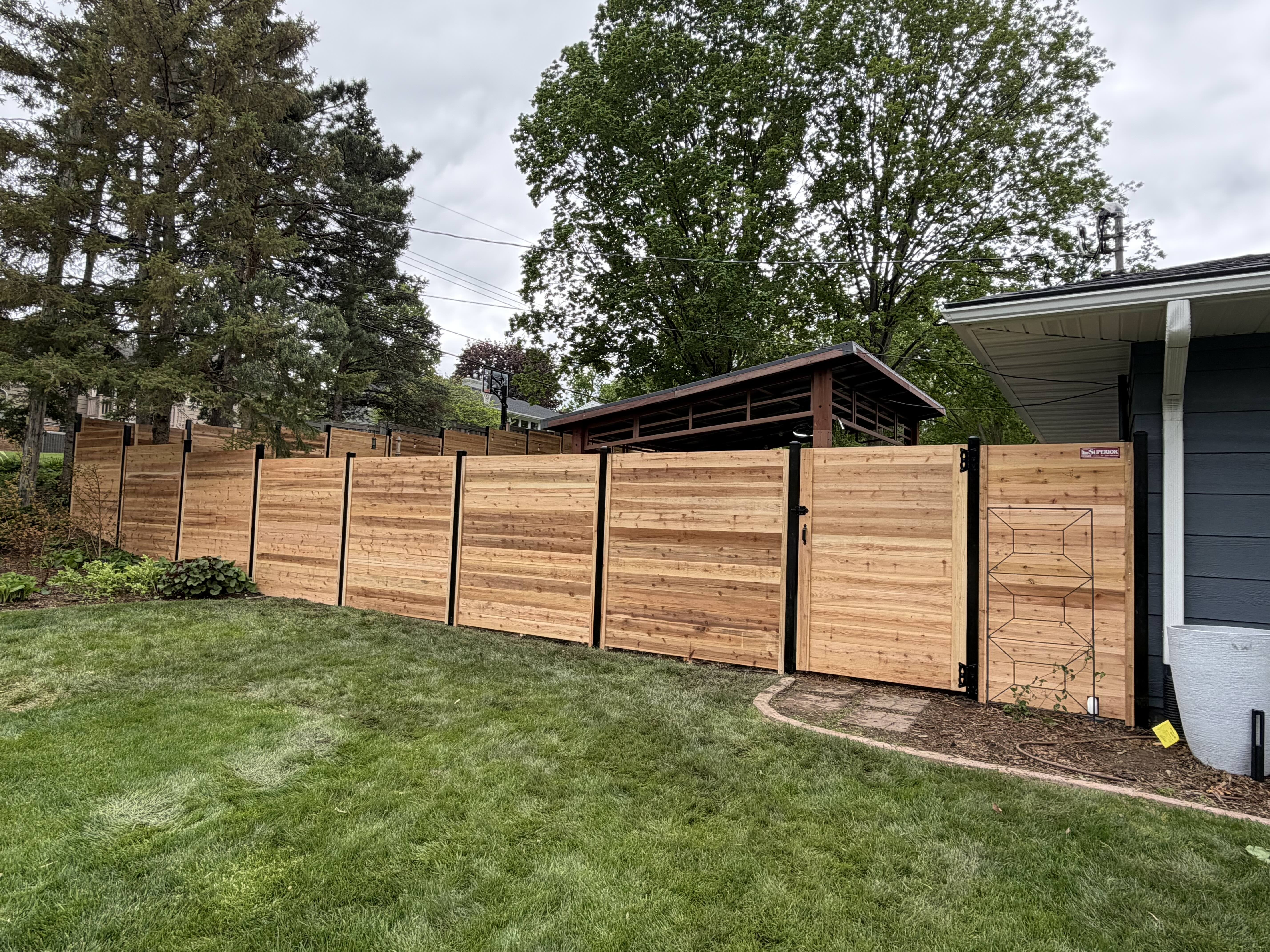
A pedestrian gate is 3 to 4 feet wide, designed for foot traffic, and uses standard residential hinge and latch hardware. A driveway gate is 10 to 16 feet wide, designed for vehicle traffic, uses heavier hardware, and often includes automation. The gate posts, footings, and structural framing are meaningfully different between the two. Choosing the right type up front prevents rework later.
At Fence Company of Columbus, we design pedestrian and driveway gates on separate specifications because they are effectively different products with different engineering needs. Here is what changes between the two.
A pedestrian gate is the standard residential access point. Width runs 3 to 4 feet. Height matches the fence line. Hinges are typically 4 or 6 inch heavy duty residential hinges. Latch is a simple thumb latch or lever latch with an optional lock. Total weight is usually under 40 pounds for wood, less for vinyl or aluminum.
The gate post carries a modest load. A standard 4 by 4 wood post or 3 inch aluminum post set 36 inches deep on concrete is enough for most pedestrian applications.
A driveway gate is a different engineering problem. Width runs 10 to 16 feet, often as a double swing (two 5 to 8 foot leaves) or a single slide. Weight can exceed 200 pounds per leaf for wood or ornamental steel. Hardware needs to handle that weight without sagging or racking under repeated use.
Driveway gate posts are structural elements. A 6 by 6 wood post or 4 inch steel post set 42 to 48 inches deep on an oversized concrete footing is typical. Automation systems (openers, sensors, control systems) add more load and require power at the gate location.
Gate posts carry the entire weight of the gate plus the dynamic load of opening, closing, and wind. Undersized gate posts fail early even when the gate itself is perfect.
Pedestrian gate hardware is largely commodity. Any decent quality 4 or 6 inch hinge and latch will last for years if the gate is not over-sized for the hardware rating.
Driveway gate hardware is not commodity. Heavy duty ball bearing hinges rated for 200+ pounds per hinge, drop rods that reliably seat in ground receivers, and self closing hinges rated for gate weight are all specialty items. Skimping on driveway gate hardware is one of the fastest ways to end up with a sagging or failing gate within a year.
Automation is a driveway gate feature that pedestrian gates almost never need. If automation is on the table, it changes:
Can I use pedestrian gate hardware on a driveway gate?
No. Pedestrian hardware is rated for the weight of a pedestrian gate. A driveway gate on pedestrian hardware will sag or fail within months.
Do I need permits for a driveway gate?
Often yes, especially if the gate is automatic or if the driveway approach is close to the street. Check local requirements before install.
Can a pedestrian gate be added to a driveway gate?
Yes. A common configuration is a double swing driveway gate with a separate pedestrian gate next to it, so you can walk through without operating the large gate.
Which fails first, the gate or the posts?
Undersized gate posts usually fail first because they carry a load they were not sized for. Properly sized posts easily outlast the gate hardware.
At Fence Company of Columbus, we design pedestrian and driveway gates on separate specifications, with the right post depth, hardware, and structural details for each so the gate holds up as long as the fence itself.
👉 Call us, email us, or fill out the form on the home page to receive a free quote. We serve Powell, Dublin, Westerville, Worthington, Hilliard, Upper Arlington, and Delaware.
Written by the team at Fence Company of Columbus, updated July 2026.


Business License # HIC-L01324

