
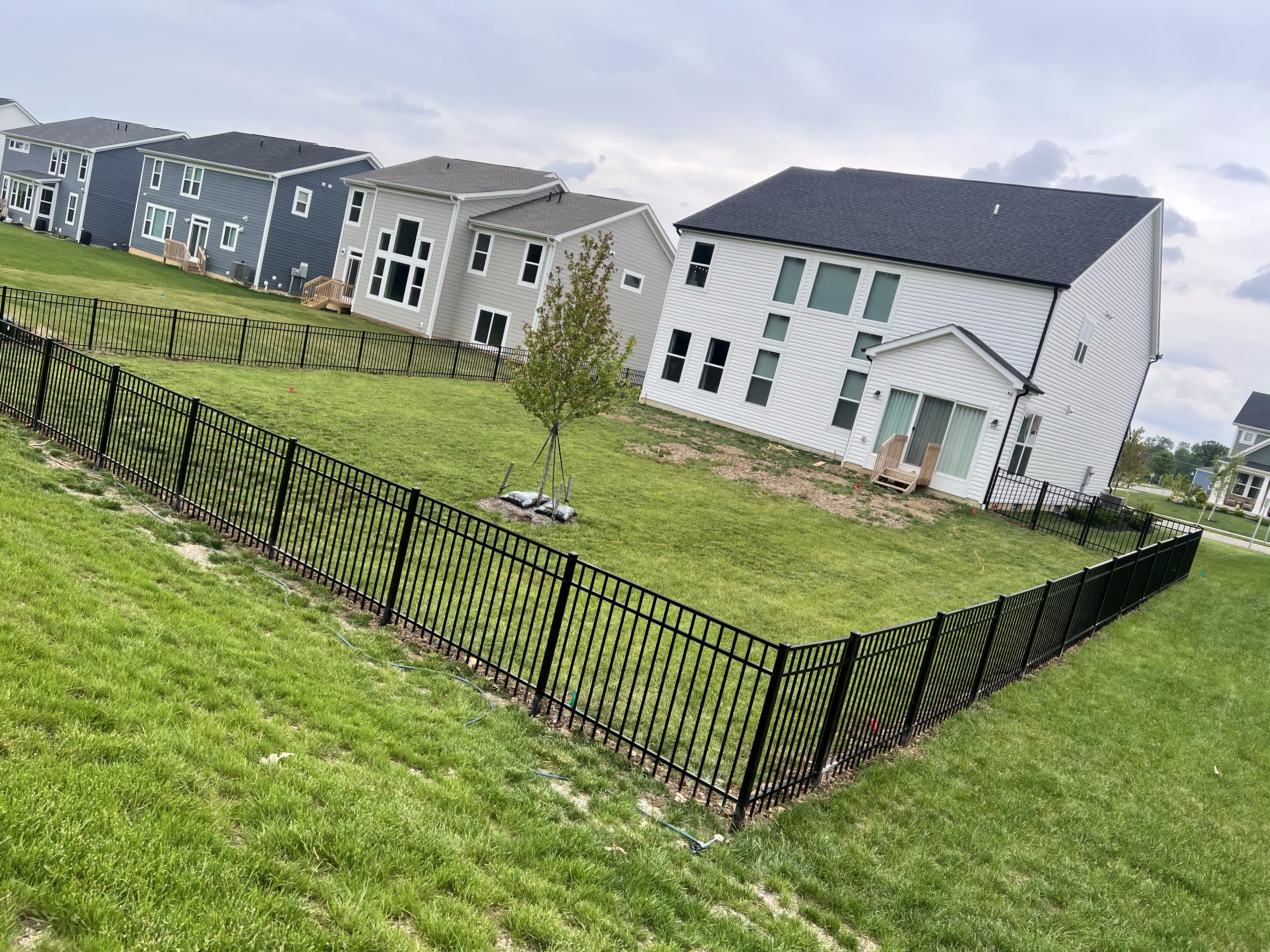
Powder coating is a dry finish process that sprays electrostatically charged powder onto metal, which is then baked to fuse into a hard protective layer. Compared to traditional paint, powder coat is significantly more durable, more resistant to chipping and fading, and lasts 15 to 30 years in outdoor use. It is why modern ornamental steel and aluminum fences look new for decades.
At Fence Company of Columbus, every ornamental steel and aluminum fence we install has a powder coat finish. It is the single most important detail that determines how the fence looks in year 20 versus year 1. Here is what powder coating actually is and why it matters.
Powder coating starts with the fence being cleaned, degreased, and often galvanized. The clean metal is then electrostatically charged so that dry powder (a mixture of finely ground pigment, resin, and additives) is attracted to and clings to the surface. The powder-coated fence is then baked in a curing oven at around 400 degrees Fahrenheit. The heat melts the powder into a smooth, hard, uniform coating that bonds chemically to the underlying metal.
The base metal of an ornamental fence, whether steel or aluminum, does the structural work. The finish does the visual and protective work. When the finish fails, the fence stops looking good and, in the case of steel, starts to rust. The finish is what makes the fence age gracefully rather than degrade.
A quality powder coat on aluminum can effectively last the life of the fence. On steel, the powder coat is the first line of defense against rust. A chip or scratch that reaches bare steel is where corrosion starts. Prompt touch-up on damaged coating extends the life of the underlying metal by decades.
Black is by far the most common powder coat color on residential ornamental fencing, and for good reason. It reads well against landscaping, does not show minor dirt or dust, and matches almost any home exterior. Other common colors:
Powder coat is durable but not indestructible. The most common failure points are:
Can a powder coat finish be redone?
Yes. A fence can be sandblasted back to bare metal and repowder coated, though the process is labor intensive and typically only makes sense on premium historic or high-value fences.
Does powder coat protect steel from rust completely?
It prevents rust as long as the coating is intact. Once the coating is chipped or scratched through to bare metal, rust can start. Prompt touch-up is essential.
Is powder coat the same as anodizing?
No. Anodizing is an electrochemical process specific to aluminum that changes the surface layer of the metal. Powder coating is a separate applied finish. Anodized aluminum is a different product from powder coated aluminum.
How long does a quality powder coat last?
15 to 30 years for exterior residential fence use. Higher-end automotive-grade powder coats last longer. Cheaper coatings on discount fences may fail in 5 to 10 years.
At Fence Company of Columbus, we use quality powder coated ornamental steel and aluminum on every install because the finish determines what the fence looks like in year 20, not just year 1.
👉 Call us, email us, or fill out the form on the home page to receive a free quote. We serve Powell, Dublin, Westerville, Sunbury, Hilliard, Upper Arlington, and Delaware.
Written by the team at Fence Company of Columbus, updated July 2026.


Business License # HIC-L01324

