
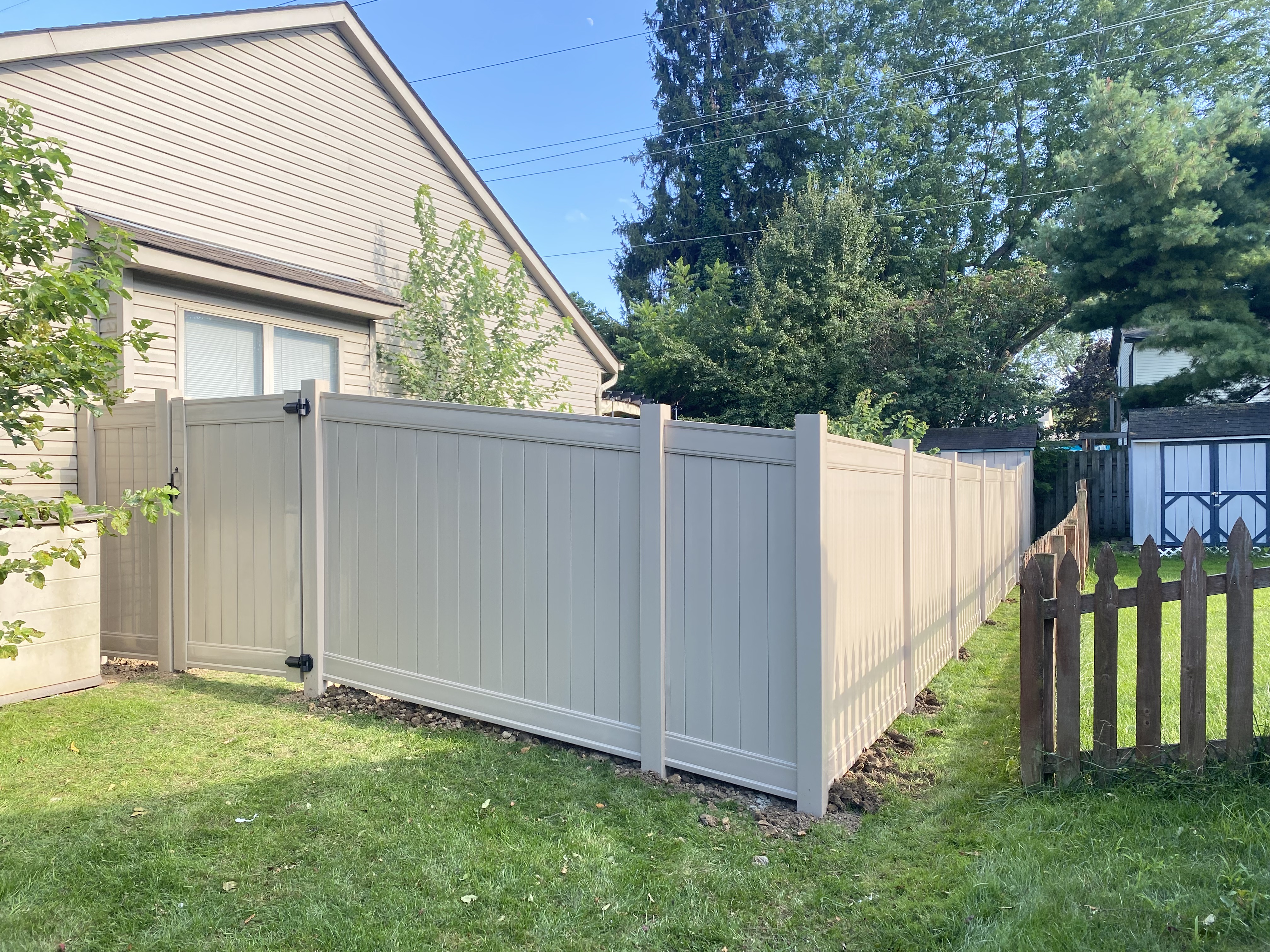
Choose white vinyl when your home has cool-toned siding (gray, blue, cool white), when you want maximum brightness and visual contrast, or when you want the classic clean fence look. Choose tan vinyl when your home has warm-toned siding (beige, brown, tan brick, or natural stone), when you want the fence to blend rather than contrast, or when white would compete visually with the house.
At Fence Company of Columbus, we install both white and tan vinyl privacy fencing. The color choice affects how the fence reads against the home and the landscaping, not the fence's function or durability. Here is how to decide.
White vinyl is bright, clean, and visually assertive. It reflects light back into the landscape rather than absorbing it, which makes the fence a visual element that the eye notices. White works best when the home's exterior includes cool tones (gray siding, blue accents, white trim) or when the design intent is a crisp, classical look.
The strengths of white vinyl: high contrast against green landscaping, easy to keep visually clean-looking, matches a wide range of architectural styles. The weaknesses: shows dirt and stains more readily, competes visually with warm-toned home exteriors, and can feel out of place on natural or rustic landscape designs.
Tan vinyl (sometimes called almond) is warmer and more neutral. It blends with warm-toned home exteriors and natural landscaping rather than contrasting against them. The fence recedes into the yard rather than announcing itself.
The strengths of tan vinyl: hides dirt, dust, and pollen better than white; pairs beautifully with beige siding, tan brick, and stone; fits naturally with warm-toned landscape design. The weaknesses: less visually assertive than white, can look muddy against very cool-toned home exteriors, less crisp overall look.
White vinyl contrasts strongly against green foliage, mulch beds, and brown fencing on neighboring properties. It draws the eye. Tan vinyl blends with the landscape, letting foliage and other design elements carry the visual weight.
For homeowners who invested heavily in landscaping and want the plants to be the visual focus, tan vinyl is usually the better choice. For homeowners who want the fence itself to be a design statement, white vinyl typically wins.
Cleaning and Maintenance
White vinyl shows dust, pollen, mildew, and lawn splatter more readily than tan. It needs more frequent cleaning to stay looking bright. A rinse with a hose 2 to 3 times a year is usually enough. In areas with heavy pollen (spring) or heavy dust (near unpaved surfaces), more frequent cleaning helps.
Tan vinyl is more forgiving of dust and dirt because the color hides minor accumulation. Cleaning is still recommended annually, but the visual difference between cleanings is smaller.
Both white and tan vinyl are color-extruded through the entire panel thickness, so surface scratches and minor damage do not reveal a different color underneath. Both are UV-stabilized to resist fading. Both hold their color for 20 to 30 years or more in Ohio's climate.
White does show yellowing or discoloration from certain lawn chemicals more readily than tan. Tan is more forgiving of minor color shifts because the base color is warmer to begin with.
White and tan vinyl typically cost the same. Some manufacturers add a small premium for tan (5 to 10 percent) because it is less common, but the cost difference is minor. Do not choose color based on price.
Almond is a lighter, warmer variant of tan that reads more like ivory or cream. It fits between white and tan on the color scale. Almond works well with warm-toned homes where full tan would feel too dark, or as a compromise between the crispness of white and the warmth of tan.
Availability is more limited than white or tan. Confirm with your specific vinyl supplier before committing to almond.
White is far more common in central Ohio, but tan is gaining share as homeowners recognize how well it pairs with warm-toned home exteriors.
Rarely a good idea. A vinyl fence typically looks best as a single unified color. Mixing feels patched together unless the design intent is very deliberate.
Not meaningfully. Both white and tan are neutral enough to appeal to future buyers. The color that matches the home better is more important than the specific color.
Tan, slightly. Both colors show organic staining, but the darker starting color makes staining less obvious on tan.
At Fence Company of Columbus, we walk homeowners through the tan versus white choice on site, matching the vinyl color to the home exterior and the landscape design rather than defaulting to whichever is most common.
👉 Call us, email us, or fill out the form on the home page to receive a free quote. We serve Powell, Westerville, Sunbury, Hilliard, Upper Arlington, Delaware, and the surrounding area.
Written by the team at Fence Company of Columbus, updated July 2026.


Business License # HIC-L01324

