
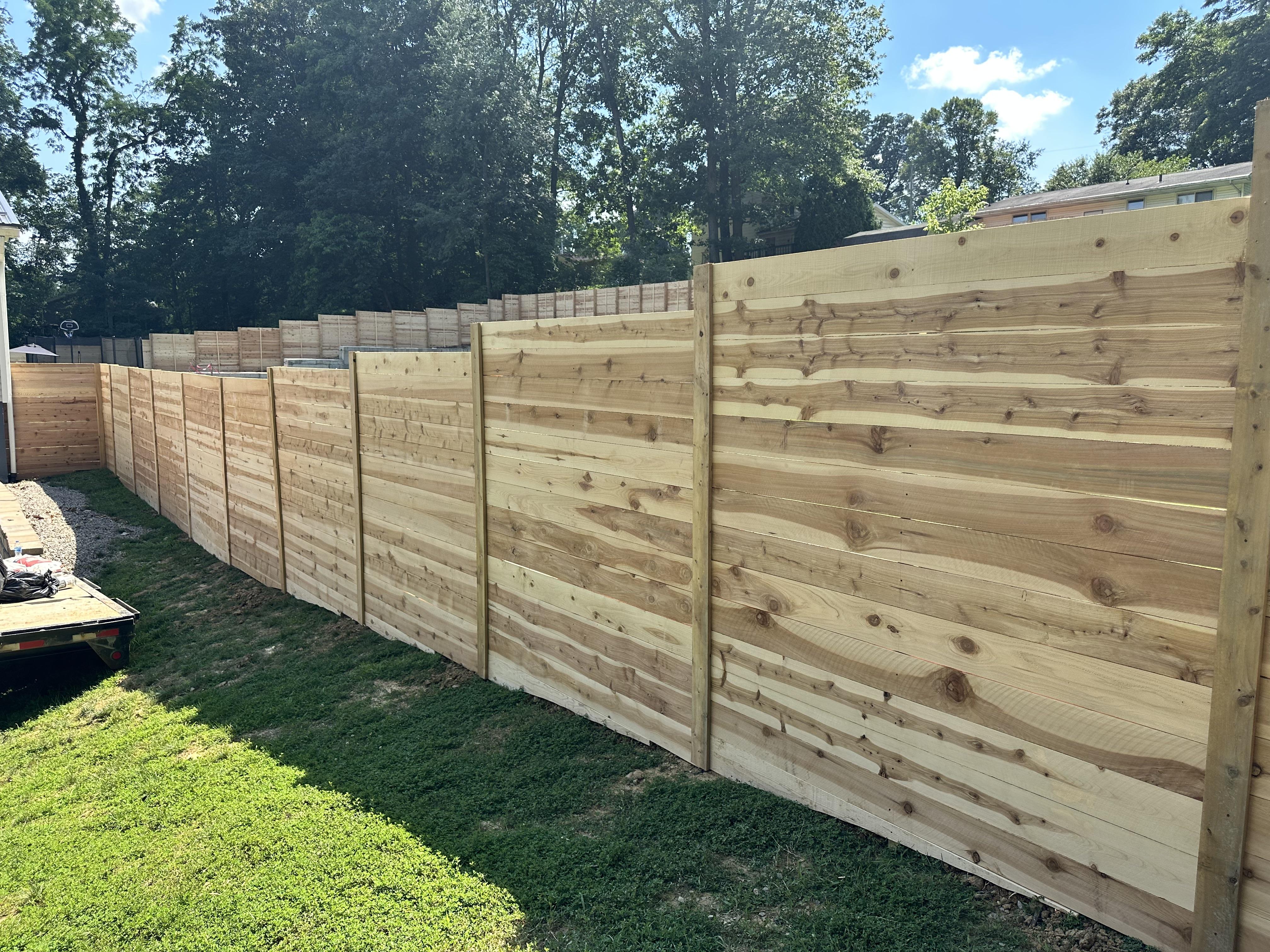
Horizontal fencing has become one of the most requested styles in the Columbus area, and the reason is pretty straightforward: it looks different from everything else on the block. The boards run side to side rather than up and down, and that one change in orientation gives a fence a completely different character. Fence Company of Columbus installs horizontal cedar on everything from compact patio spaces to long property lines, and the results consistently stand out.
A horizontal fence uses the same basic materials as a standard privacy fence: cedar boards, vertical posts, and framing. The difference is that the boards run across the face of the fence from post to post rather than standing upright. Boards are stacked in tight rows, and the clean horizontal lines become the defining visual feature of the fence.
Because boards span horizontally, post spacing is more important here than in a standard vertical fence. Longer boards need more support to stay flat over time. Most horizontal installs use a steel post system — typically black powder coated — to give each post the rigidity that horizontal loading requires without adding visual bulk.
The style suits homes with clean architectural lines: modern or contemporary siding, flat rooflines, or newer construction where the fence needs to feel intentional rather than just functional. It works especially well around outdoor living spaces like patios, decks, and hot tubs, where the fence becomes part of the room rather than a boundary around it.
Horizontal also reads well against natural backdrops. A long run of horizontal boards along a wooded property line creates a strong visual contrast between the engineered lines of the fence and the organic texture of the trees. If the view matters, horizontal makes it look deliberate.
Cedar is the most common choice for horizontal fence boards, and for good reason. It's naturally resistant to moisture and insects, which matters because horizontal boards collect water on their flat top edges more readily than vertical boards do. The warm honey tones of fresh cedar also age better and photograph better than pressure treated pine for a style where the wood grain is part of the appeal.
If you use pressure treated pine instead, plan to apply a quality sealer after the wood has had a full year to dry. The horizontal faces will thank you.
Long horizontal runs need proper support. Without the right post spacing and fastening pattern, boards can bow or pull away from posts over time. This is one area where the quality of the install matters as much as the material. Correctly set posts, consistent spacing, and the right fastener placement are what keep a horizontal fence looking sharp five or ten years in.
Thinking about a horizontal fence for your yard? Fence Company of Columbus can help you figure out whether the style fits your space and what materials make the most sense.
👉 Call us, email us, or fill out the form on the home page to receive a free quote. We serve Powell, Dublin, Westerville, Worthington, Hilliard, Upper Arlington, and Delaware.


Business License # HIC-L01324

