
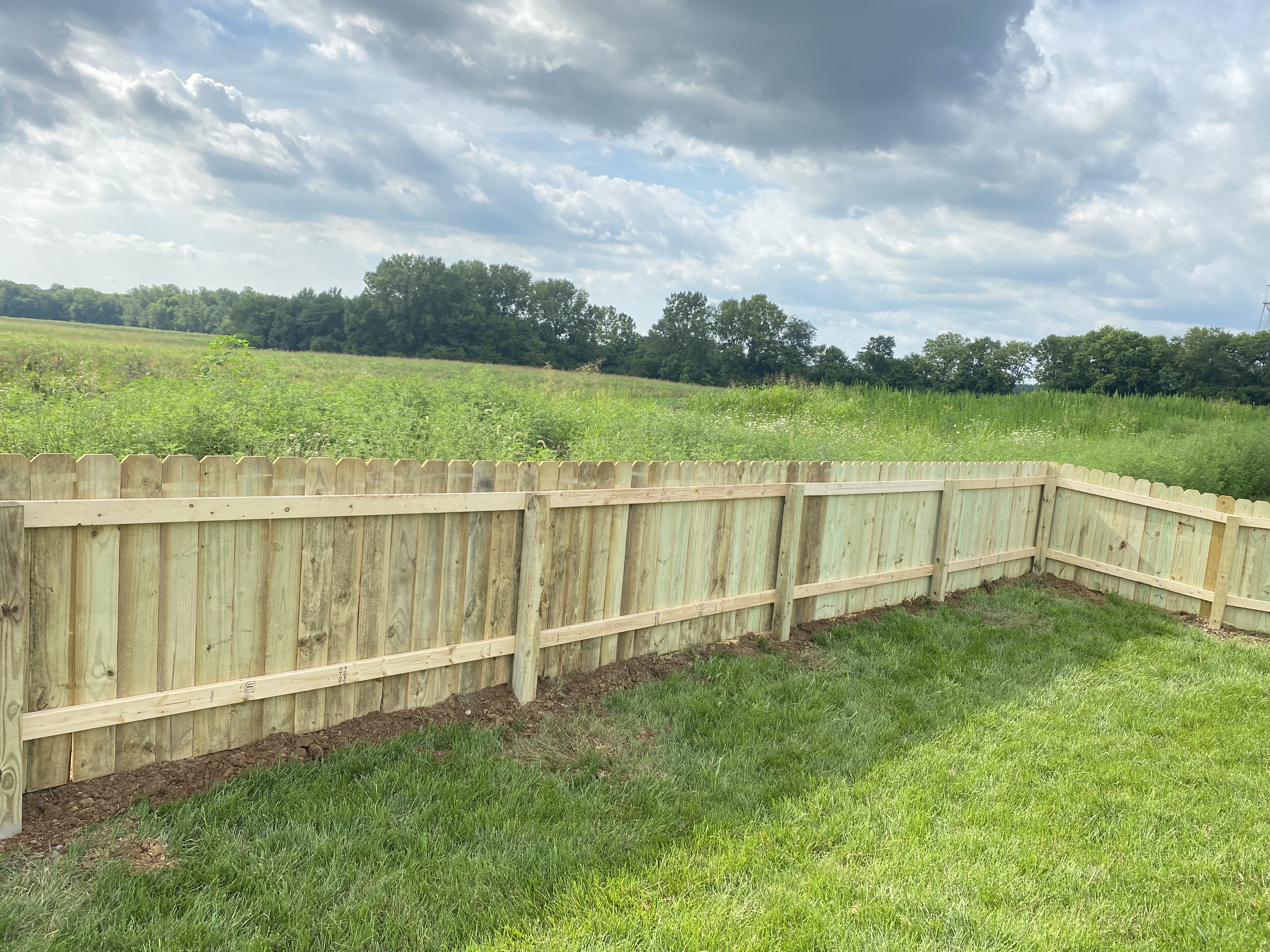
Wood fences almost always fail at the posts, not the boards. Ground-line rot, shallow post depth, and inadequate concrete footings account for the majority of premature fence failures in Ohio. The visible boards are what you notice, but the posts are what determines whether the fence lasts 5 years or 30. Understanding post failure is understanding fence lifespan.
At Fence Company of Columbus, we tear out failing fences constantly. The pattern is almost always the same. The boards look tired but repairable. The posts are the reason the fence has to come down. Here is where wood fences actually die and what to look for.
Walk any wood fence that is 15 to 25 years old and check the failure points. In almost every case, the answer is the same: at or just below the ground line, where the post meets the soil. Boards and rails on the same fence usually have another 10 years of life in them. The posts are what has aged out.
This has held true across cedar, pressure treated pine, and every other wood species used in residential fencing. The location of failure is a physics problem, not a species problem.
The wood-to-soil contact point is the most vulnerable spot on any wood fence. Three things happen there constantly:
The result is that even a properly installed post starts breaking down at the ground line long before the rest of the fence does. The question is not whether it happens, but how fast.
Ohio's frost line is 32 inches. Posts set shallower than that get pushed upward every winter by frost heave. Even a post that is not rotting will shift out of plumb within a few years if it does not sit past the frost line on a concrete footing.
Frost heave and ground line rot are two separate problems, but they compound each other. A shallow post that is also rotting fails much faster than a deep post that is rotting or a shallow post that is not. Get both details wrong and the fence has a fatally short lifespan.
A proper post footing does three jobs: it transfers wind and impact loads into the soil, it isolates the wood post from direct soil contact where possible, and it forms a drainage surface that sheds water away from the post base.
Common shortcuts include filling only the bottom of the hole with concrete and packing dirt around the top of the post. That approach saves concrete but exposes the top of the buried section to the exact wet-soil conditions that cause ground-line rot.
Check every post on a fence that is more than 10 years old:
Push firmly on the post from the side. Any noticeable flex or movement suggests the ground-line section is compromised.
Use a screwdriver or ice pick at the base of the post, just above and below ground level. If the tool sinks in easily or the wood crumbles, the post is rotting from the inside.
Look for concrete footings that have risen above grade over the years. That is a sign of frost heave and typically indicates the post was set too shallow.
A single failing post is a repair. Multiple failing posts across the fence line usually mean the whole fence has aged past its useful life. The math looks like this:
Individual post replacement runs $200 to $500 per post depending on complexity. Full fence replacement runs $3,000 to $15,000 depending on linear footage.
If you have 3 to 4 failing posts on a 150 foot run, repair is the right call. If you have 8 to 12 failing posts, replacement typically wins on cost per year of remaining life. The break-even point is usually around 25 percent of total posts.
How long do wood fence posts last in Ohio?
Properly installed cedar or pressure treated posts last 20 to 30 years. Shortcut installations (shallow depth, undersized concrete footings, no crown) can fail in 5 to 10 years.
Can I replace just the posts without replacing the fence?
Yes for individual posts. For widespread failure, replacement is usually more cost-effective than replacing every post while keeping aged boards.
Do metal or steel post inserts extend life?
Yes, significantly. Steel post inserts (also called post savers) sleeve around the ground-line section of a wood post and isolate the vulnerable zone from direct soil contact. They add years to fence life on premium installations.
What is the sign a post is about to fail?
Visible lean, soft or crumbly wood at the ground line when tested with a screwdriver, concrete footing rising above grade, or the fence looking wavy from either end. Any of these means the post is at or near the end of its useful life.
At Fence Company of Columbus, we install fences with 30 to 36 inch post depths, proper concrete footings, and drainage crowns because those are the details that determine whether the fence lasts 10 years or 30.
👉 Call us, email us, or fill out the form on the home page to receive a free quote. We serve Sunbury, Dublin, Westerville, Worthington, Hilliard, Upper Arlington, and Delaware.
Written by the team at Fence Company of Columbus, updated July 2026.


Business License # HIC-L01324

